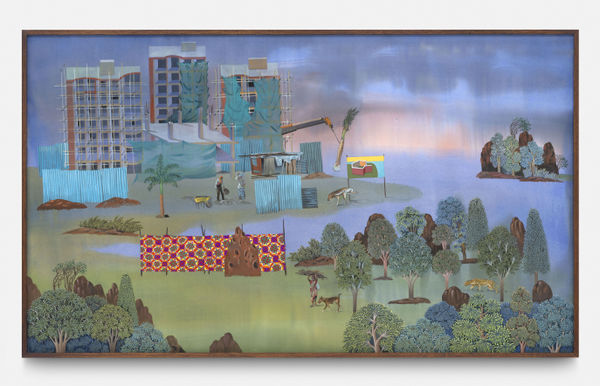
Pavan Kavitkar: Vocabularies of a Shifting Landscape

Pavan Kavitkar’s artworks begin where nature is already under pressure, marked by displacement and constant modification. The landscapes he engages with are neither utterly untouched nor destroyed, but continuously modified — measured, divided, and rebuilt through human intervention. These are not distant sites of extraction, but environments we inhabit and inherit. The violence of new order is felt here as a slow process rather than a single event. As cities extend outward and forests retreat, rural landscapes are fragmented or absorbed into urban infrastructure, altering local ecosystems, social structures, and collective memory.
The exhibition Vocabularies of a Shifting Landscape brings together a new series of artworks depicting landscapes shaped by growing tension and changing patterns on land. His compositions depict intricate details of everyday life that exist between imagination and contemporary reality.
He works with watercolours, oil colours, and gouache, drawing on a strong technique based on Indian miniature painting and the Bengal School of Art, (emerged in 1905) in resistance to colonial academic realism. The details and anecdotes within his paintings form visual vocabularies of change, observed directly in his surroundings. They appear through buildings under construction, scaffolding, blue metal roofing sheets, barbed wire cutting through land, and irrigation systems extracting water for excessive farming. The lives and routines of migrant workers, villagers, and inhabitants unfold within these conditions. We see nature that remains lush, sometimes secluded and paradoxically peaceful. The surreal and symbolic depiction of architectural and natural spaces act as a place of refuge for him. The precision of his brushwork and the complexity of the narrative provide a sense of connection and intimacy.
Without romanticising nature or condemning construction, Pavan Kavitkar shows the land he has lived with — its gestures, rituals, and accumulated traces — and the ways it carries them forward.